How to Write a Series Bible
Adam P. · October 9, 2026 · 4 min read
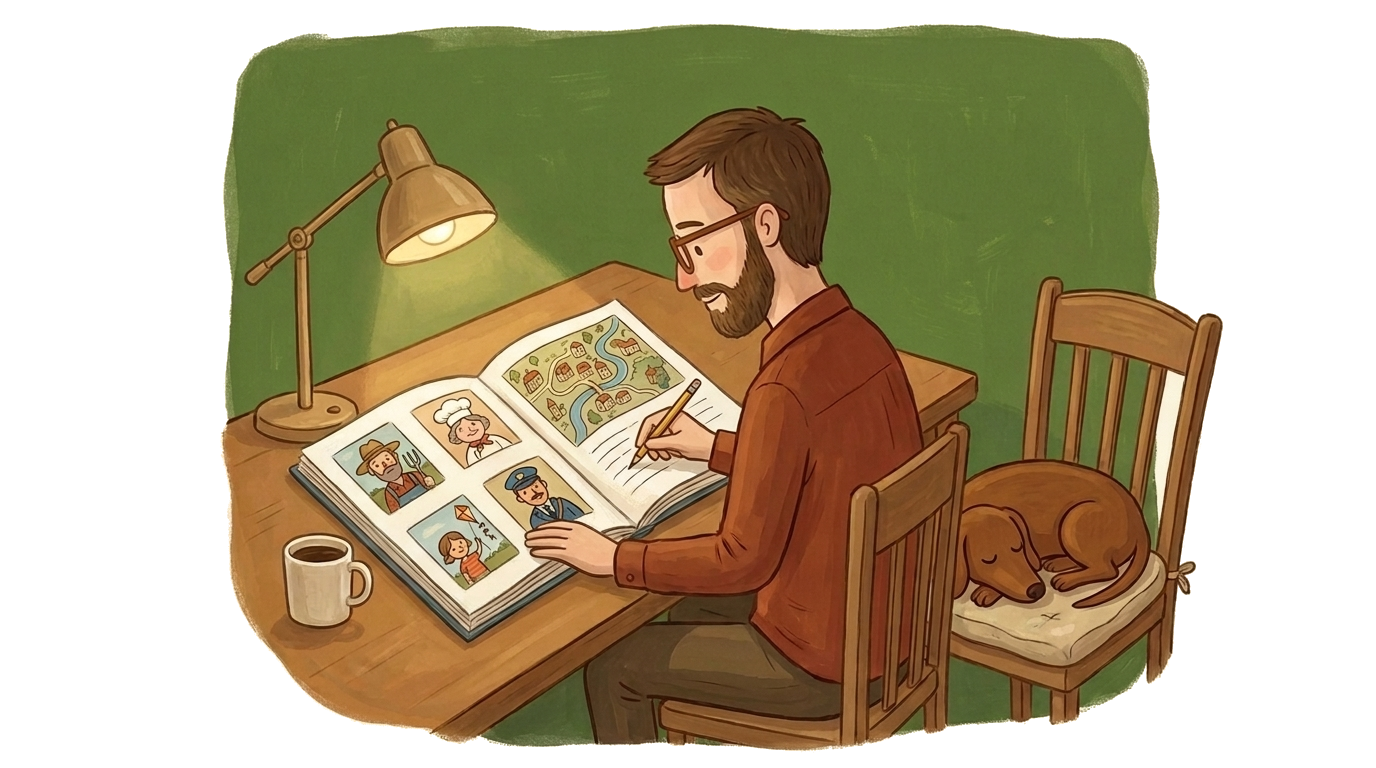
A series bible is a document that describes a TV show beyond its pilot: the idea, the characters, the world, the pilot story, and where the show goes from there. You'll also hear it called a show bible or a pitch bible.
There are really two kinds. A production bible is what a show that's already running keeps to track its own continuity: who's related to whom, what happened in season two, what the characters' apartments look like. A pitch bible is a selling document, written before anyone's said yes. This post is about the second kind.
First question: do you even need one?
Honestly? Often not.
A screenwriting professor once told me he thought most bibles kill interest rather than create it, and I think he had a point. A buyer wants to fall in love with your pilot. Hand them thirty pages of lore and five seasons of plot, and you've given them thirty pages of reasons to say no.
Write one when someone asks for it, when you're pitching an animated show (where a bible with art is pretty standard), or when your show's world can't be understood from the pilot alone. Otherwise, put that energy into the pilot. Even when you do write one, shorter is almost always better.
The five parts of a good bible
Here's the structure I use. Every section is prose, not bullets.
1. The angle
Open with a page of conversational writing, with no heading at all: your personal take on the show. Why this world, why these people, why you, why now. It should read like you're telling a friend about a show you can't stop thinking about, because that's what you're doing.
2. The idea
Who the show is about, what their central dysfunction is, and how the world of the show tests it.
Parks and Recreation is a great model. Leslie Knope is a relentlessly optimistic small-town bureaucrat who believes government can make people's lives better. The show puts her in a parks department where nothing gets done, under a boss who'd happily shut the whole government down. Her optimism is tested every single week, by the place built to crush it. That's an idea you can explain in thirty seconds, and you can already picture fifty episodes. If you need help finding that central dysfunction, start with the TV character post.
3. The cast
Two to four characters, and for each one, how they generate story. Not their job and three adjectives. The conflict they bring.
Ron Swanson isn't just "Leslie's gruff boss." He's a man who runs a government department and wants it to do as little as possible, which means every one of Leslie's big ideas has to get past him. That's a story engine, not a description.
4. The pilot summary
A page or so on the pilot story. Lead with what the main character wants. Write this section last, after the rest of the bible has forced you to be clear about the show.
5. Episodes
Six to twelve sample episode ideas, a few sentences each. This is where a buyer sees the engine running. Each one should be a different story that only these characters in this world could have. If they all feel like the same episode, the bible just told the reader something you didn't want them to know.
If you know roughly where season one ends up, a short paragraph on that helps. You don't need to map out five seasons. Nobody's buying season five yet.
Things to leave out
- "It's this meets that" as your opener. Describe your show in its own terms.
- Pages of world-building lore. Even in genre, the world matters because of what it does to your characters.
- A detailed map of future seasons. It reads as overconfident and hands people reasons to disagree.
- Character bios that are just jobs and adjectives. If a character doesn't generate stories, cut them from the bible, or from the show.
- Bullet points everywhere. A bible is a reading experience, not a slide deck. Write it in prose.
The bible supports the pilot, not the other way around
Nobody buys a show off a bible. They buy it because the pilot made them laugh, or scared them, or made them need to know what happens next. The bible's job is to prove there's more where that came from. If you haven't pitched it yet, here's how to pitch a TV show. If the pilot isn't done, start there.
Get the pilot right first
Every Auteur report on a TV pilot grades story, structure, character and world, and tells you page by page where the show is working and where it isn't. Send us your pilot and you'll have coverage back in minutes.