TV Characters Are Built on a Paradox
Adam P. · October 9, 2026 · 5 min read
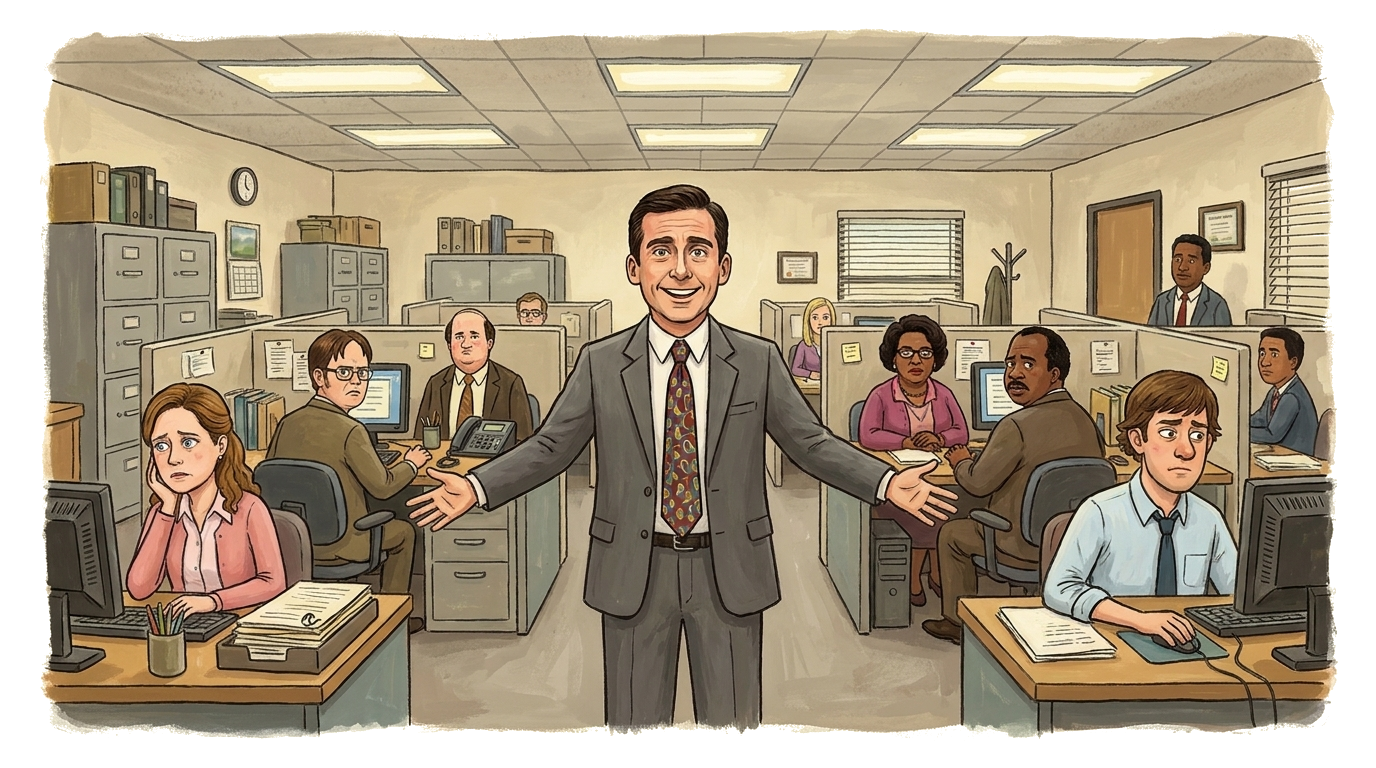
In a movie, the main character changes. That's the whole point. They start with a flaw, the story forces them to face it, and by the end they're someone new.
TV can't work that way, at least not quickly. The show needs its characters to keep being themselves for years. If Michael Scott learned his lesson in the pilot, there's no Office. So TV characters get built differently. A great TV character is built on a paradox: two things that are both true about them and can't both be satisfied.
Revealed, not developed
Here's the shift that made TV click for me: in TV, character revelation replaces character development.
Each episode doesn't turn the character into a new person. It shows us another side of the same person, under new pressure. The paradox is what keeps producing those new sides. As long as the two halves of the character are still at war, there's another episode.
Find the hypocrisy
The fastest way into a character's paradox is to ask a slightly rude question: what's their hypocrisy? Or put another way, what do they want, and what's fundamentally wrong with the way they want it?
- Michael Scott wants, more than anything, to be loved by the people who work for him. He's also their boss. Every attempt to be their friend makes him a worse boss and makes them more uncomfortable, which makes him try harder.
- Eleanor Shellstrop in The Good Place is a selfish person trying to become good, mostly so she doesn't get sent to hell. Her selfishness keeps sneaking into her attempts at goodness, and that's the engine of the whole first season.
- Frasier Crane is a psychiatrist who can diagnose everybody but himself. His pomposity is armor for a man who badly wants approval, especially from the people least likely to give it.
- Larry David on Curb Your Enthusiasm is obsessed with the rules of social behavior, and he breaks them constantly, usually by saying the thing the rest of us only think.
None of those characters are just "cranky" or "lovable." Each one is two things pulling in opposite directions, and you can't fix one without breaking the other.
Write each paradox in one line
When I'm building a show, I write one line for each regular: their main paradox. Short, specific and a little uncomfortable. Something like:
- Preaches tolerance, can't stand being disagreed with.
- Believes in freedom, runs her house like a prison.
- Gave up hope years ago, still shows up every single day.
- Sweet and loving, and says the worst possible thing at every family dinner.
If you can't write that line, the character isn't ready. If two characters have the same line, one of them doesn't need to be in the show.
The arena exists to test the paradox
The world of your show isn't just a setting. It should be built to press on your lead's paradox, every week.
Michael's paradox only works because he's the boss. Make him a regular employee and the show deflates. Eleanor's only works in a place that literally grades how good you are. Ask yourself the same question about your show: why does this character have to be in this place? If the honest answer is "no reason," either the arena or the character needs work. There's more on designing that world in the TV pilot post.
Cast characters who press on it
The supporting cast should exist because of the conflict they bring to the lead, and the best ones press directly on the paradox.
In 30 Rock, Liz Lemon wants to have it all and look down on corporate ambition while doing it. Jack Donaghy is corporate ambition in a perfect suit, and he's also her mentor, which is a much more interesting problem than if he were just her boss. On Frasier, Niles is Frasier's mirror: same snobbery, same insecurities, which makes him both his best friend and his biggest rival.
I got a note on one of my own pilots that my two leads were too one-note together. They had no one but each other, so there was no push and pull. The fix was giving them as many reasons to push each other away as they had to need each other. Suddenly every scene had a temperature.
So do TV characters ever change?
They do, just slowly, and by inches. In a typical episode, the paradox drives the character into trouble, they get a glimpse of a better way to be, and then the paradox pulls them back by the next week. Over a whole series, the small changes add up. Michael Scott at the end of the series isn't the same man as in the pilot. It just took seven seasons.
A useful way to think about it: a movie flaw gets overcome. A TV paradox gets managed.
Three levels of motivation
Paradoxes get even richer when you split a character's motivation in three:
- What they tell other people. "I'm doing this for the team."
- What they tell themselves. "I'm doing this because it's the right thing to do."
- The real reason, which they often discover at the end of the episode. "I'm doing this because I'm terrified everyone will leave."
That third level is where the end of a good episode lives, the small moment where the character finally sees, or says, what it was really about. If you want to see where that lands structurally, here's how half-hour acts work.
Why we root for difficult characters
Paradox is also how you make an unlikable character watchable. We stick with characters who say what we wish we could say. We like characters who call out other people's hypocrisy, even when they're hypocrites themselves. And we forgive almost anyone who's lonely and trying to connect, however badly they're doing it. The paradox lets the audience see the want underneath the behavior.
Common character problems in pilots
- One-note characters. No contradiction, so nothing left to reveal by episode three.
- A paradox that only lives in the character description. If it never shows up in a scene, it doesn't exist.
- Two characters with the same paradox. Cut or combine.
- Solving the paradox in the pilot. If Michael becomes a great boss in episode one, the show is over.
- An arena that never touches it. The world should force the conflict, not just host it.
See how your characters read
Every Auteur report on a TV pilot grades your Protagonist, Antagonist and Minor Characters, and the analysis calls out where the characters are carrying the show and where they're going flat. Send us your pilot and you'll have coverage back in minutes.