How to Pitch a TV Show
Adam P. · October 9, 2026 · 5 min read
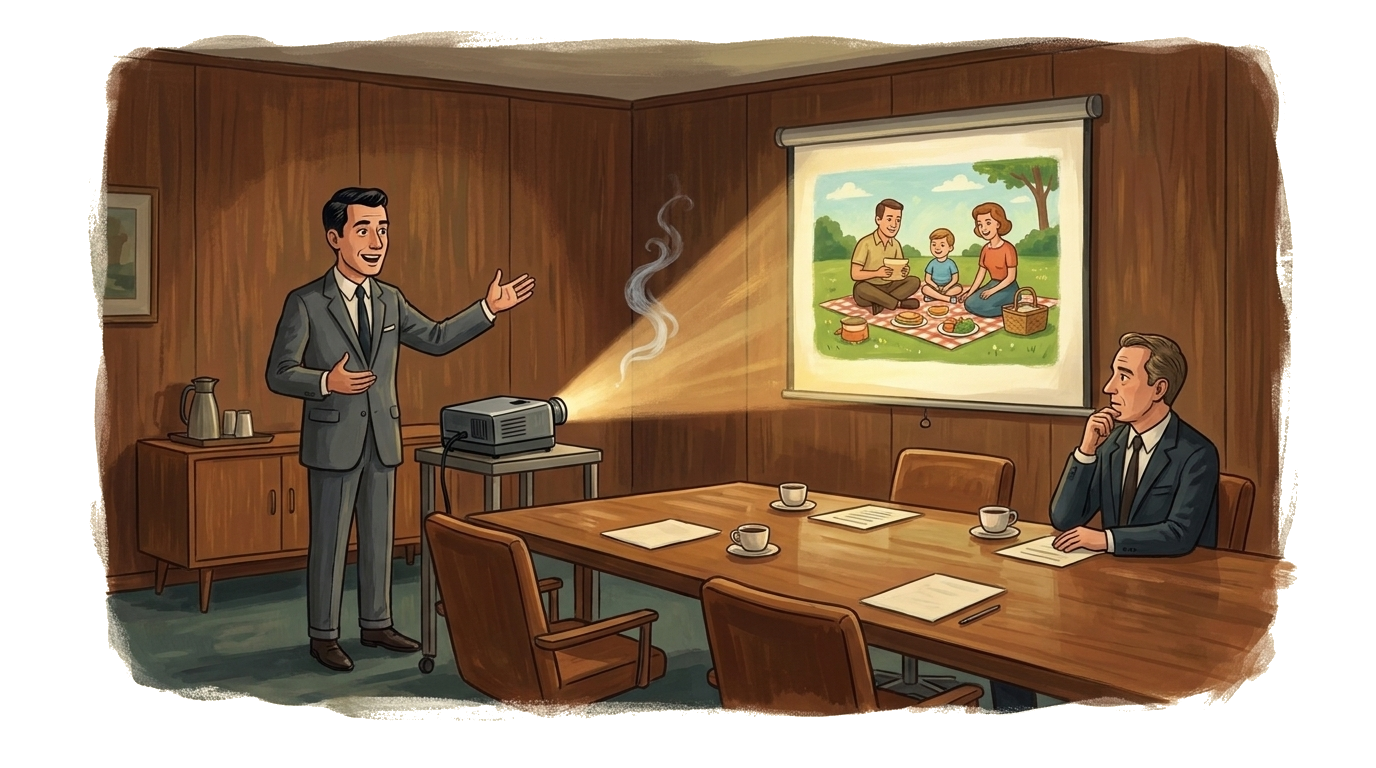
A TV pitch is a story told out loud. That's all. You walk into a room, or onto a video call, and for fifteen minutes or so you tell a few people why this show should exist and why you're the one to write it.
Most bad pitches fail the same way. They open with backstory and world-building, spend ten minutes on the setting, and get to the actual story right as everyone's attention is drifting. A good pitch gets to the people and the conflict fast, and it sounds like a story, not a report.
The seven things every pitch has to answer
Whatever order you put them in, every TV pitch needs to cover these:
1. Why you. Why do you have to write this show? Open with something personal. Not your résumé, a connection: the job you had, the family you grew up in, the thing you can't stop thinking about. Keep it authentic without making it all about you. The show still has to be something people would watch.
2. The arena and home base. The world of the show, and the place it keeps coming back to. The bar, the precinct, the kitchen. Paint it in a couple of sentences, then move on.
3. The Star. Who the show is about, what they want, and what's wrong with the way they want it. The Star is the character who brings the most conflict, and their central contradiction is what keeps the show running. More on that in the TV character post.
4. The antagonist. Your #2 character, a person rather than an idea, and as complicated as the Star.
5. Two or three more characters. Each defined by the conflict they bring to the Star, not by their job. "Her best friend" isn't a character. "Her best friend, who's secretly applying for her job" is.
6. The pilot story. First in one sentence, then in one sentence per act. Tell it like a campfire story, with the turns and the surprises, not like a summary.
7. Where it goes. What a typical episode looks like, and roughly where season one ends up. Buyers are buying the hundredth episode as much as the first.
Notice what isn't on the list: whether it's single-camera or multi-camera, a detailed history of the world, or which celebrity you'd cast. Let the story decide the format. And naming an actor isn't the same thing as describing your lead.
A worked example
Here's what those answers might sound like for a show you already know, The Bear, pitched as if it didn't exist yet.
- Arena and home base: a struggling Italian beef sandwich shop in Chicago. The home base is the kitchen, which is too small, too hot and always behind.
- The Star: a celebrated fine-dining chef who comes home to run the family shop after his brother's death. He wants to save it. His problem is that the perfectionism that made him great is exactly what's tearing him and everyone around him apart.
- The antagonist: his brother's best friend, the guy everyone calls his cousin, who's run the shop the old way for years and fights every single change.
- More characters: an ambitious young chef who needs this kitchen to work for her own reasons, and a staff that's been doing things their way since before he showed up.
- The pilot in one sentence: a burned-out chef takes over his late brother's chaotic sandwich shop and tries to run it like a real kitchen, while the debts, the staff and his cousin fight him at every turn.
- Where it goes: every episode, the kitchen is a pressure cooker, and the real story is whether he can fix the restaurant without becoming the thing that broke him.
In two minutes, a room knows the world, the lead, the conflict and the engine. That's a pitch.
Open on an image, not a history
The best pitching advice I ever got: start with the story, not the backstory.
I learned it the hard way. An early version of one of my pitches spent its first couple of minutes on my lead's history. The version that worked opened on an image: a car swerving down a desert highway at night, a bottle rolling around on the passenger seat. Same story, same character. But now the room wanted to know who was driving, and I could reveal who he really was from there.
Pick the most vivid moment you've got and start inside it.
Write the pilot in 65 words first
Before you ever pitch, try writing your pilot as one sentence of about 65 words: who wants what, who's in the way, two turns where the lead tries something and gets blocked, and how it ends. If you can't, you're not ready to pitch it, because you don't know the story well enough yet. Here's how that works for a half-hour.
Don't fake an ending
If you don't know how season one ends, don't invent something on the spot that you'll regret. Know the direction of the show, even if the details are open. And every story has a moment where the lead is finally pushed into acting. Know exactly where that is in your pilot, because that's the moment everyone in the room will be waiting for.
Comps, carefully
"It's X meets Y" can help a room orient, especially in a business pitch or a deck. But it's a crutch if it's doing the work your description should do, and it sounds amateurish as an opening line. Describe your show first. Reach for a comp only if someone looks lost.
How not to blow the meeting
- Do your homework. Know who you're meeting and what they've made.
- Be early, but not too early. Five to ten minutes is right. Thirty minutes early makes it awkward for everyone.
- Be as nice to the assistant as to the exec. The assistant is the exec in five years, and they talk.
- Don't trash other shows. You never know who in the room worked on one.
- Only leave behind clean materials. If you bring a one-pager, make it polished. Never hand over something you'd want to fix.
- A no is a no. Thank them and move on. Arguing doesn't turn it into a yes.
- Rehearse out loud and time it. A pitch that's great in your head can run long in a room.
Some rooms will ask for a series bible after the pitch. Plenty won't. Either way, the thing that makes the pitch possible is a pilot that works.
The pilot is the pitch you leave behind
Most of the time, the pilot script is what really gets you in the room, and what gets passed around after you leave. Matthew Weiner wrote the Mad Men pilot years before anyone made it, and in the meantime that script is what got him hired on The Sopranos. Before you pitch, make sure the pilot is ready. Here's how to write one.
Get a read before the room does
An Auteur report on your pilot gives you a logline, a 20-category ratings grid and page-specific notes on story, character and structure, which is exactly the prep a pitch needs. Send us your pilot and you'll have coverage back in minutes.