What Is Script Coverage? A Working Screenwriter's Guide
Adam P. · October 4, 2026 · 6 min read
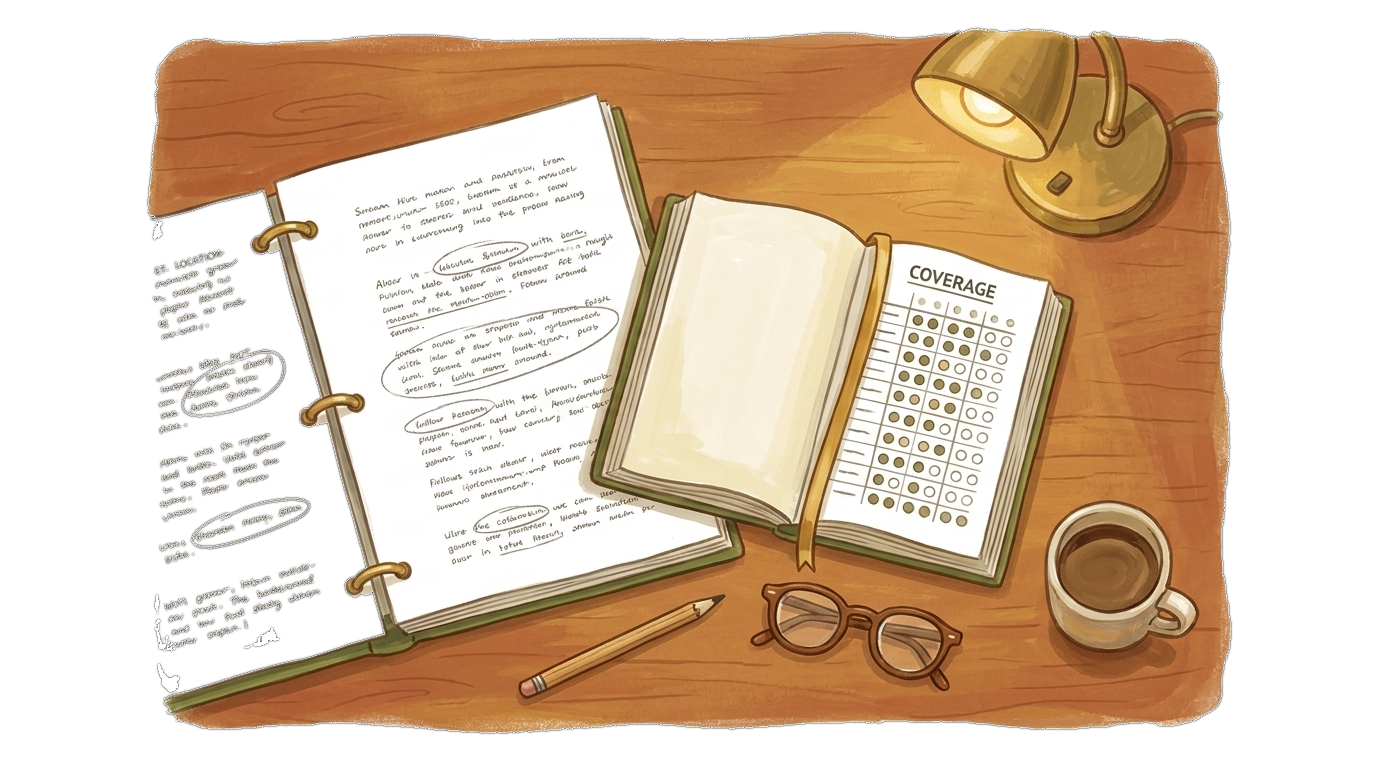
Script coverage is a written report on a screenplay. Someone reads your script cover to cover, writes up what it's about, what's working, what isn't, and gives a verdict on whether it deserves anyone else's time. That's it. That's the whole mysterious thing.
I know it from both sides. I'm a working screenwriter, so I've been on the receiving end of plenty of coverage, some of it sharp and some of it clearly written by someone who checked out around page 40. And we at Auteur, myself included, have written countless pieces of coverage over the years at production companies, studios and management companies, and for paid coverage services too. So we've been on both sides of it for years: the industry reads that decide what gets made, and the paid reads writers buy to get better. This is the guide I'd hand any writer before they pay for their first read.
Why coverage exists
Production companies, studios and management companies get buried in scripts. Way more than any exec or manager could ever read. So they hire readers, and readers take the script home, read the whole thing, and write coverage that lets the person upstairs decide in five minutes whether to spend two hours on your pages.
That's industry coverage, and it's written for the buyer. When you pay for coverage as a writer, you're getting the same format pointed at you instead. It's not helping an exec decide whether to read you. It's telling you what a professional reader sees in your draft, and what to fix before it lands on that exec's desk.
What's in a coverage report
Every company formats it a little differently, but the bones are pretty much always the same.
A cover sheet. Title, writer, page count, genre, and a logline, a one-sentence version of your premise. The logline is usually the first thing a reader writes and sometimes the hardest. If a reader struggles to write a clean logline for your script, that tells you something.
A synopsis. Industry coverage usually has a page or two summarizing the plot, because the exec hasn't read it. Coverage written for you often skips this. You know what happens in your movie. Hopefully.
Comments. This is the meat. The reader's take on the concept, structure, characters, dialogue, pacing and marketability. Good comments are specific. "The second act drags" is a vibe. "The party sequence on pages 50 to 60 hits the same note of tension three times before anything changes" is a note you can actually do something with.
A ratings grid. Grades across categories like premise, structure, character and dialogue, so you can see at a glance where the draft is strong and where it's soft.
A verdict. In the industry that's Pass, Consider or Recommend.
What Pass, Consider and Recommend mean
Pass means the reader doesn't think the script should go further. Most scripts that come through a company get a pass. Every reader writes a lot of them, and every writer you admire has a stack of them.
Consider means there's something real here, a voice, a hook, a role an actor would kill for, but the script needs work or isn't quite right for that company.
Recommend means "the boss should read this today." A reader puts their own reputation on the line with a recommend, so you don't see many.
There are often finer shades too, like "consider with reservations" or "strong consider," and some companies grade the script and the writer separately. You can get a pass on the script and a consider on the writer, which roughly translates to "this one's not for us, but we want to see what you write next." That's a good day, even if it doesn't feel like one.
What a real report looks like
The fastest way to understand coverage is to read some. Our full coverage of Jordan Peele's Get Out is free to read, exactly as a writer would receive it.
It opens with the cover sheet and logline, then an intro on what the script is doing well, then the analysis, which moves from big craft notes down to specific pages. Here's how one of the page notes starts:
Then getting into page 70-72, the shoebox reveal in Rose's closet is a strong sequence, but the pacing feels a hair too fast.
That's the altitude coverage should fly at. A specific page, what's working, and what would make it hit harder. After the analysis there's an outro, a 20-category ratings grid running from Concept and Structure through Dialogue, Pacing, Marketability and Title, a recommendation, and next steps for the rewrite. If you want a different genre, the Whiplash coverage is up too.
Coverage, notes and evaluations aren't the same thing
Writers use these words interchangeably, and they really shouldn't.
Notes come from someone with skin in the game. Your manager, a producer, an exec on a show. They're about getting the script where that person needs it, which can be very specific to what they're trying to sell or make.
Coverage is a full read from someone without a stake in it, in a consistent format, with a verdict. It's the closest you'll get to seeing your script the way a company's reader sees it.
Evaluations, the kind some script-hosting sites sell, are mostly a score that decides whether your script gets shown to industry members. There's usually some feedback attached, but the main job is ranking, not helping you rewrite.
When coverage is worth getting
There are a few moments where a read really earns its keep.
Before a contest or fellowship deadline. You get one shot per draft with each competition, and the readers there read exactly the way company readers do. Get the read a few weeks out so you actually have time to use it.
Before you send it to reps or producers. You usually get one introduction to a manager. Don't burn it on the draft you're still not sure about.
After a rewrite. It's weirdly hard to tell whether a rewrite fixed the problem or just moved it somewhere else. A second read against the first one shows you what actually changed.
When you've lost all perspective. By the fifth pass, nobody can see their own script anymore. You stare at a scene so long you can't tell if it's funny or a cry for help. That's exactly what an outside read is for.
What coverage costs
Coverage from a human reader usually runs $100 to $300 a script and takes one to two weeks, and how good it is depends a lot on which reader you happen to get. We built Auteur so writers wouldn't have to gamble like that. You get a full report, written to the standard we held ourselves to at the companies and coverage services we read for, in minutes: $39 for a first read and $49 for a rewrite read, no subscription. And the six free sample reports show you exactly what you're getting before you spend a dime.
How to read your coverage
A few habits make coverage way more useful.
Read it twice, a day apart. The first read is pure emotion. You'll want to argue with it, or fake your own death. The second read is where you find the notes you'll actually use.
Look for patterns. One note may just be one reader's opinion. But if you're getting the same note from your coverage and from the people in your life who've read the draft, that's something to investigate. The same note three times is something that should probably be addressed.
Treat notes as symptoms. If a reader says a scene drags, they're usually right that it drags. The fix might be fifteen pages earlier, though, where you never set up why we should care.
You don't have to take every note. Coverage is one professional's read. Take the notes that point at something you already half-suspected, and weigh the rest.
The short version
Coverage is a professional reader's report on your script: a logline, analysis, a ratings grid and a verdict. Companies use it to decide what's worth reading. Writers use it to see what a reader sees before the script goes out into the world. Read a real example first, then get coverage at the moments when a draft is about to meet the people who decide what happens to it.
That's what we built Auteur to do. Start with the free samples to see how we read, and when you've got a draft ready, submit it here and you'll have coverage back in minutes.