Deus Ex Machina: When a Coincidence Works and When It's Cheating
Adam P. · October 9, 2026 · 4 min read
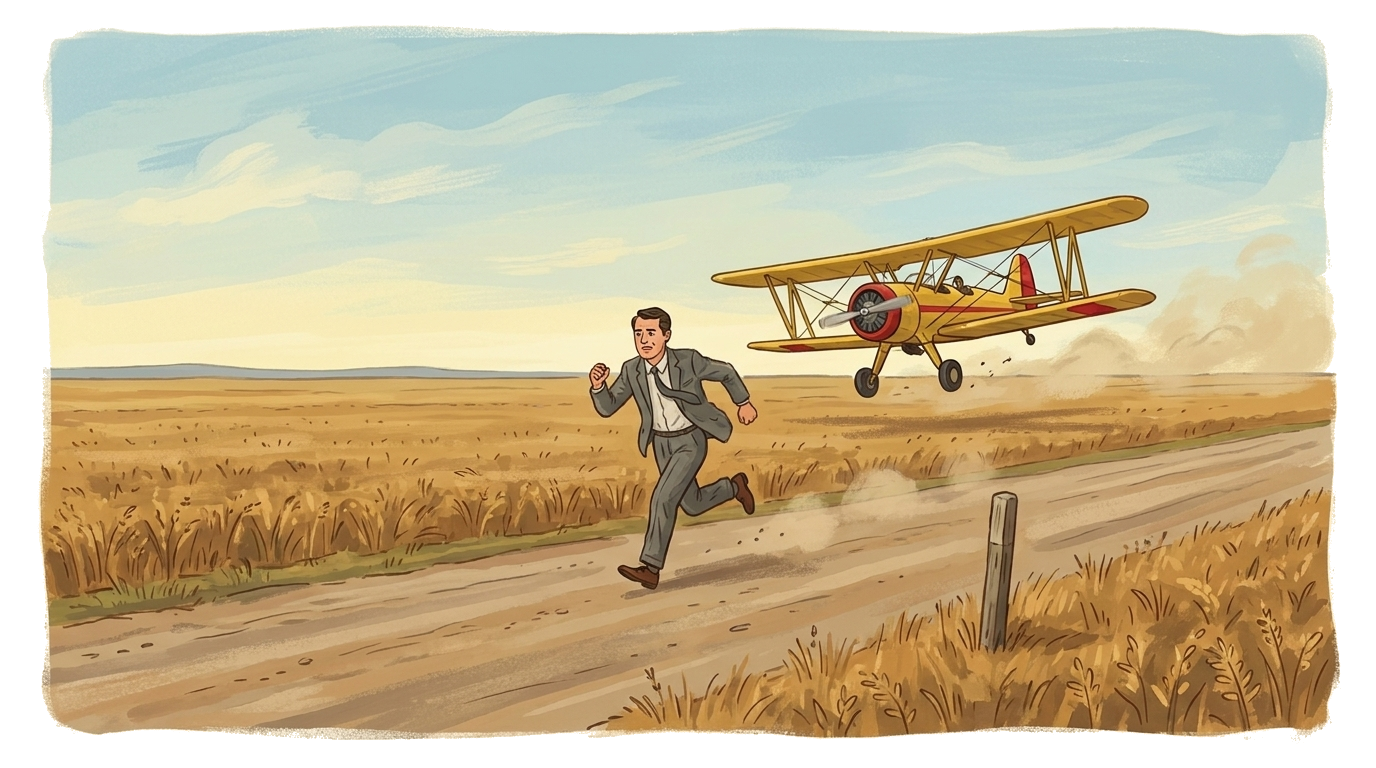
Deus ex machina means "god from the machine." In ancient Greek theater, when a plot had painted itself into a corner, a crane would swing an actor playing a god onto the stage to sort everything out. Aristotle was already complaining about it in the Poetics. The way a plot resolves, he said, should come out of the plot itself, not get dropped in from above.
Twenty-four centuries later, it's still one of the most common ways a script loses a reader in the last ten pages. These days the phrase covers any rescue the story didn't earn. The cavalry shows up. The villain trips. The hero happens to find exactly what they need in a drawer.
Help is the problem, not luck
Pixar's well-known list of story rules has a version of this I love: coincidences that get characters into trouble are great, and coincidences that get them out of trouble are cheating.
A coincidence that hurts your hero costs you nothing. A coincidence that helps them is a loan, and the audience will want it paid back.
Audiences accept bad luck because life is full of it, and because bad luck makes your hero work harder. Good luck takes the work away. And the climax is supposed to be where your protagonist proves they've overcome their flaw. If a coincidence wins the fight, they haven't proved anything, and the ending feels hollow even when the audience can't say why.
Where coincidence actually works
There are a few places a coincidence can live in a script without anyone calling foul.
1. At the very start. You get one free coincidence, and it's your premise. In North by Northwest, Roger Thornhill raises his hand to get a bellhop's attention at the exact moment the bellhop is paging a man named George Kaplan, and the spies watching the room decide Thornhill is Kaplan. Pure chance. Nobody cares, because it's what gets him into trouble, and the rest of the movie is him working his way out.
2. When it's planted. A setup turns coincidence into inevitability. The lightning strike that sends Marty home in Back to the Future is the most convenient thing in the movie. Except the movie told us about it in the first act: a woman collecting money to save the clock tower hands Marty a flyer with the exact time lightning hit it in 1955. Without that flyer it's a cheat. With it, it's a plan.
Signs goes further and makes coincidence the subject. A dying wife's last words, "swing away." A daughter who leaves half-finished glasses of water all over the house. A son with asthma. All of it is set up early, all of it pays off in the final fight, and the whole movie is an argument about whether coincidences even exist. The lead has lost his faith, and the climax is him getting it back. The lucky breaks are the point.
3. At the very end, as justice. A late coincidence can read as the universe settling accounts, as long as it rewards the choices the characters made instead of replacing them. In a movie, the universe tends to reward people who take action and punish people who make bad choices. Jurassic Park mostly gets away with the T. rex crashing into the visitor center and taking out the raptors, because the movie has spent two hours telling us nature can't be controlled. It's still a rescue, though. Notice how much setup it took to make it feel fair.
The realism rule
If your script is grounded, the bar is higher: once the story is moving, no coincidences at all. Every event should be caused by the one before it, a chain of cause and effect the audience can trust. In a realistic drama, every lucky break the reader notices is a crack in that chain, and they'll start poking at the rest of it.
"Too convenient" is one of the most common notes there is
I give this note a lot, and I've gotten it plenty. On one of my features, a crucial piece of evidence landed in my hero's hands because a supporting character simply gave it to him. The note was that it was too convenient. The fix was that helping him had to cost her something. The scene got better and so did she.
The usual suspects:
- The hero overhears exactly the right conversation.
- The right stranger happens to recognize them.
- The villain explains the whole plan.
- The cops arrive at precisely the right moment.
- The missing clue is sitting in a drawer.
- A character turns up with the solution and no reason to be there.
How to fix a convenient turn
- Make the hero earn it. Whatever falls into their lap, make them go get it instead.
- Make help cost something. If someone hands over the key, they should pay for it.
- Bring the helper along. Instead of someone handing your hero information, have them come along so they can act on it later. Now the help is a relationship, not a delivery.
- Plant it early. If you need it in Act Three, show it in Act One.
- Flip it. Could the coincidence hurt instead of help? That's almost always more interesting.
- Hang a lantern on it. Have a character point out how lucky they got. It works, but only once.
A quick checklist
- Does the coincidence help your protagonist or hurt them?
- Is it at the start, where it's your premise, or in the climax, where it's dangerous?
- Did we see the pieces earlier?
- Does your hero still make the decisive choice?
And if your climax hinges on the antagonist making a dumb mistake, that's a coincidence too. Just a better-dressed one.
Find the turns you've stopped seeing
After enough drafts, you can't see your own conveniences anymore. That's what an outside read is for. Every Auteur report includes page-specific notes on story, structure and stakes, so you can see where a reader will raise an eyebrow. Send us your script and you'll have coverage back in minutes.