What a Cold Open Has to Do
Adam P. · October 9, 2026 · 4 min read
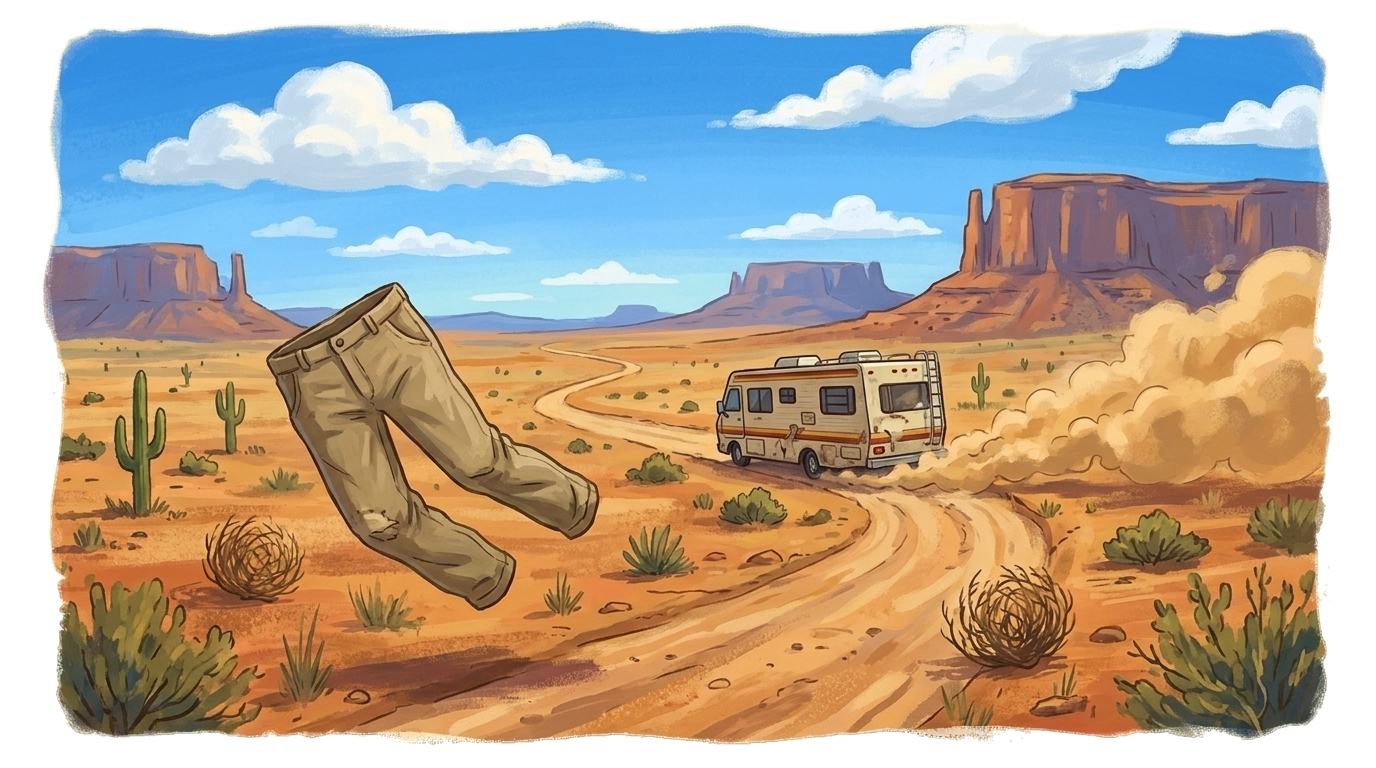
A cold open is the scene, or handful of scenes, that plays before a show's opening titles or first commercial break. In a script it's usually labeled TEASER. It's two or three pages long, and it's the first thing anyone reads.
That last part is why it matters so much. A reader decides how much they trust you in those first pages. A great cold open buys you the benefit of the doubt for the rest of the script. A flat one means you spend the next thirty pages earning it back.
The two kinds of cold open
The story teaser kicks off the episode's problem. It drops us into the action, and the rest of the episode deals with the fallout.
The Breaking Bad pilot has the most famous one there is. A pair of khakis floats through an empty desert sky. Then an RV careens down a dirt road, driven by a middle-aged man in a gas mask and his underwear. He crashes, records a goodbye video for his family, and walks out into the road to face the sirens. Then the show jumps back three weeks, and spends the hour explaining how a mild-mannered chemistry teacher ended up there. You'd follow that show anywhere.
The standalone cold open is a self-contained piece, usually comic, that often has nothing to do with the episode's plot. The Office turned these into an art form. The fire drill in "Stress Relief," where Dwight starts a real fire to test everyone's emergency preparedness, is a whole episode's worth of chaos in a few minutes. Brooklyn Nine-Nine got one of its most famous moments from a cold open, a police lineup where the suspects end up singing the Backstreet Boys.
Even the standalone kind isn't random, though. It's always about the characters. It works because it shows us who these people are when they're under pressure, which is the show.
What every cold open has to do
Hook with the first image. The floating pants. Open on something we've never seen, or something we've seen a hundred times shown in a way we haven't. A strong visual opening tells a reader you think in pictures.
Show the whole show in miniature. The tone, the central relationship and the core problem, ideally all in one scene. If someone only read your teaser, they should be able to tell what kind of show this is and who it's about.
Play one conflict. A cold open is too short for a whole story. Give it one clear conflict beat, two people who want different things, and let it escalate.
Plant a red flag. Something in the teaser should tell us trouble is coming this episode: a promise the character can't keep, a plan that's obviously going to go wrong, a stranger at the door. That's what pulls us into Act One.
End on a button. The last line or image should snap. A joke, a reveal, a question. It's the thing that carries the audience across the title card.
In a pilot, the stakes are higher
In a pilot, the cold open has an extra job: it has to sell the show.
The best pilot teasers state the emotional dilemma that drives the series, sometimes before we even know the characters' names. Often the event that changes the lead's life forever happens right here, or the teaser sets it up so it can land at the end of Act One. The Lost pilot opens tight on a man's eye in a bamboo forest. He gets up, runs out onto a beach and into the burning wreckage of a plane crash. In about three minutes you know the scale, the mystery and the lead. That's a show.
If you're writing a pilot, the whole pilot post is here.
How long should a cold open be?
- Half-hour comedy: two to three pages.
- Hour-long drama: usually a little longer, three to five pages.
If your teaser runs past five pages, it's probably two scenes that want to be one, or it's swallowing material that belongs in Act One. For how the rest of a half-hour is built around it, see sitcom structure.
Common cold open problems
These are the ones I flag most when I read:
- Starting with backstory. A cold open is the worst place to explain. Start in the middle of something.
- Running too long. If it takes six pages to get to the titles, the reader's already checking the page count.
- A joke any show could do. If the gag doesn't depend on these specific characters, it isn't doing its job.
- No red flag. Nothing in the teaser makes us worry about the episode ahead.
- The flash-forward as a crutch. Jumping to the exciting part first only works if the episode earns it. If the story's slow, showing the cool scene up front just delays the problem.
- The Star isn't in it. Especially in a pilot, your lead should be front and center from page one.
Find out what a reader thinks of your first pages
Every Auteur report includes page-specific notes, and the first pages get the same scrutiny a professional reader gives them. Send us your pilot and you'll have coverage back in minutes.